

- Pick your season: April to June and September to October bring warm, comfortable days for sightseeing. July and August can be very hot, so plan outdoor sites for the early morning.
- Go early or late at the Acropolis: Visit at opening or in the final hours before closing, when crowds and heat ease. Shade is scarce, so bring water and a hat, and wear shoes with good grip, as the marble is slippery.
- Follow a simple route: Start at the Acropolis and Acropolis Museum, then wander Plaka and Anafiotika, cross to the Ancient Agora and Monastiraki, and finish with sunset from Lycabettus Hill.
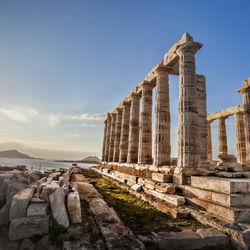
- Match day trips to your time: Cape Sounion suits a half-day sunset trip, Delphi is a full day, and Meteora is a very long day, so many visitors stay overnight.
- Eat smart and follow local etiquette: Share meze or order daily specials a street away from Plaka’s main lanes for better value, and tip 5–10% in tavernas. Cover shoulders and knees in churches, and watch your valuables in Monastiraki and on crowded metros.

Experience Athens Tours with us
Athens blends ancient history with lively neighbourhoods, making it one of Europe's most rewarding cities for sightseeing. Our Athens, Greece tours cover the main tourist attractions of Athens, from the Acropolis and Parthenon to the Acropolis Museum, the Temple of Olympian Zeus, and the lanes of Plaka. You can also join hop-on-hop-off bus tours, a market food walk, a Cape Sounion sunset trip, or a day trip to Delphi and Meteora. Booking tickets and tours in advance secures timed entry, saves queue time, and keeps your things to do in Athens, Greece, running smoothly.
Filter
Filters selected
Select a date or date range
Categories
Attraction
Sort by:
-
 Instant confirmation E-VoucherCity Sightseeing Athens: Hop-On, Hop-Off Bus TourfromUS$ 19.32 per person
- Instant confirmation E-VoucherAcropolis of Athens Ticket with Audio GuidefromUS$ 40.61 per person
- Instant confirmation Skip the lineAcropolis Afternoon Tour with Archaeologist GuidefromUS$ 35.12 per person
- Instant confirmation E-VoucherCape Sounion & The Athens Riviera Sunset TourfromUS$ 205.80 per person
- Instant confirmation Skip the lineAcropolis Museum Ticket with Audio GuidefromUS$ 28.54 per person
- Instant confirmation E-VoucherAncient Athens Tour: Acropolis, Parthenon & Acropolis MuseumfromUS$ 120.74 per person
- Instant confirmation E-VoucherPrivate Tour of Athens City & Acropolis - VIPfromUS$ 653.09 per person
- Instant confirmation E-VoucherAthens City Tour & Acropolis Museum with TransfersfromUS$ 120.74 per person
- Instant confirmation E-VoucherAthens Food Guided Tour through Famous MarketsfromUS$ 75.74 per person
- Instant confirmation Skip the lineBig Bus Athens Hop-On, Hop-Off Bus + Acropolis Ticketfrom
US$ 64.76US$ 57.35 per person
Our tips for Athens
Good to know
Athens uses Eastern European Time (UTC+2) in winter and UTC+3 during summer. The euro (€) is the local currency, and cards are widely accepted, although carrying some cash is useful for smaller shops and kiosks. From 1 November to 31 March, the Acropolis is open from 8 am to 5 pm, with last entry at 4:40 pm. Summer opening hours run from 8 AM to 8 PM from April 1 to August 1, with earlier closing times in September and October.
Other Athens attractions and museums follow their own schedules, so check opening hours before visiting. The Acropolis has an elevator for visitors with reduced mobility, although some ancient stone paths are uneven. Metro Line 3 connects Athens International Airport to Syntagma Square in approximately 40 minutes and requires a separate airport ticket.
Frequently Asked Questions
-
Q: What is the best time to visit Athens?
A:For an optimal experience, consider visiting Athens during the pleasant weather and lesser tourist crowds of spring (April to June) and autumn (September to October). Summers tend to be hot and busy, while winters are generally mild but can be rainy.
-
Q: How do I get around?
A:The Athens Metro provides efficient and convenient travel within the city, with an extensive network that connects major attractions and neighborhoods. Athens has a comprehensive bus system that covers the entire city, including both central areas and suburbs. Well-established bus routes and schedules can be found at bus stops and online. Along the coastal areas, Athens has a tram network that operates, providing scenic views and access to popular destinations such as the beach and the city center. Taxis are easily available in Athens. You can either hail one on the street or locate them at designated taxi stands. It is recommended to ensure that the taxi meter is running throughout your journey.
-
Q: What is the official language spoken in Athens?
A:Greek is the official language spoken in Athens, Greece. However, in tourist areas, you will find that many locals have a basic understanding of English and can communicate to some extent.
-
Q: How many days should I spend in Athens?
A:To fully explore Athens' major attractions like the Acropolis, Ancient Agora, and Plaka neighborhood, it is advised to allocate a minimum of 2-3 days. If you have additional time, you can consider venturing out to nearby destinations such as Delphi or the islands for a more comprehensive experience.
-
Q: What are some must-visit attractions in Athens?
A:When visiting Athens, some essential attractions that shouldn't be missed include the Acropolis and its iconic Parthenon, the Ancient Agora, the charming Plaka neighborhood, the National Archaeological Museum, and the impressive Temple of Olympian Zeus.
-
Q: Any tips to saving money in Athens?
A:Athens is a relatively safe city. Keep these travel tips in tow so your trip can go off without a hitch. Though beautiful, it’s best to take extra caution when visiting Omonia Square, especially late at night. Green spaces throughout the city like the National Gardens are beautiful in the daytime, but minimal lighting at night means the areas can be rife with pickpockets. When considering the things to do in Athens after dark, walking in the gardens should be avoided. In any emergency, dial 112.
Cities Near Athens
Travel Inspiration
- TipsBest Time to Visit Athens: Busy Season vs Quiet Season
Choosing the best time to visit Athens isn’t just about weather. It’s about how much you’ll spend and how you’ll experience this… The post Best Time to Visit Athens: Busy Season vs Quiet Season appeared first on The Guidebook - isango!.
Read more ➟ - BudapestSolo Travel in Europe: 7 Cities That Are Safe, Social and Easy to Navigate
Do you know why people prefer Europe for their first solo trip? Europe is the easiest place in the world to take… The post Solo Travel in Europe: 7 Cities That Are Safe, Social and Easy to Navigate appeared first on The Guidebook - isango!.
Read more ➟ - Isango InsiderAthens for First-Time Visitors: A Complete Travel Guide
As the cradle of Western civilization, Athens is a mesmerizing blend of history, culture, and modern vibrancy. Known for its ancient landmarks… The post Athens for First-Time Visitors: A Complete Travel Guide appeared first on The Guidebook - isango!.
Read more ➟
Get the latest offers and inspiration
Sign up to our newsletter and get the best isango! has to offer
- Enter a valid email
Terms of Use
Get in touch

Shopping with us is safe and secure guaranteed!
© 2006-2026 isango!